 Staff4dshire Roofing Specialists
EPDM vs GRP vs Felt Flat Roofs: A Staffordshire Guide
EPDM rubber, GRP fibreglass or torch-on felt? A practical guide to choosing a flat roof for garages, extensions and dormers in Staffordshire.

Some of the most stubborn roof leaks have nothing to do with the slates or tiles themselves. They come from the junctions: where the roof meets a chimney, a wall, a valley or a dormer. Those junctions are usually sealed with lead, and when the lead or the mortar around it fails, water finds its way in. Here is how to spot the problem and what a proper repair looks like.
Damp patches on the chimney breast or ceiling near the stack, especially after heavy rain or driving wind, are a classic sign. You might also see staining in the loft around the chimney, damp timbers, or water marks where a roof meets a wall.
From the outside, look for lead that has lifted, cracked or slipped, missing or crumbling mortar around the stack, and slipped or broken slates or tiles next to the chimney. Binoculars from the garden are safer than climbing a ladder.
Around a typical chimney there are several pieces of lead working together. Step flashings run up the sides, tucked into the brick joints and dressed over the roof covering. An apron flashing runs across the front, and a back gutter at the rear collects water running down the roof and directs it round the stack. Each piece overlaps the next so water always runs out and away.
If one piece is too short, has lost its fixings, or has been replaced with a sealant or tape, the whole system can fail. Lead also needs room to expand and contract; very long pieces or pieces fixed too tightly can crack over time.
The same principles apply wherever two roof slopes meet or a roof meets a vertical surface. Lead-lined valleys carry a lot of water, so debris, slipped tiles or worn lead can quickly cause leaks. Bay windows and dormers have their own flashings and lead coverings that need the same care.
When we carry out leadwork we look at the whole junction, not just the obvious split, because the visible damage is often the end of a longer story.
A chimney can also let water in through the brickwork and joints. Weathered mortar, a cracked flaunching around the pots or damaged brickwork will all let water soak into the stack. On older properties we often use lime mortar, which lets the masonry breathe; on others a traditional compo (sand and cement) mix is appropriate. Matching the method to the building matters.
A lasting repair usually starts with safe access, normally a chimney scaffold, so the work can be done properly rather than from a ladder. We then strip out failed lead, rake out joints, renew flashings and back gutters with correctly sized, properly fixed lead, repoint where needed and make good the slates or tiles around the stack.
Sealants and tapes can buy time in an emergency but are not a substitute for correctly detailed leadwork.
Our team puts a lot of care into fine detailing around chimneys, abutments, valleys, hips and edges, because that is where most leaks start. Whether your property is a period house in Lichfield or a newer home in Cannock, the same attention to detail applies.
Staff4dshire Roofing Specialists carry out leadwork, chimney repairs, pointing and roof repairs across Staffordshire and the West Midlands, with scaffolding organised through our own scaffolding company. Send us a few photos and your postcode and we will arrange a visit.
Small inspections can sometimes be done from other access, but proper repairs to lead and brickwork are best done from a chimney scaffold.
That is a bigger decision involving structure, ventilation and sometimes planning. If the stack is sound, repairing the lead and pointing is often simpler.
Older, solid-walled buildings often need lime mortar so the masonry can breathe. Newer brickwork can usually take a traditional sand and cement mix. We match the method to the building.
Staff4dshire Roofing SpecialistsEPDM rubber, GRP fibreglass or torch-on felt? A practical guide to choosing a flat roof for garages, extensions and dormers in Staffordshire.
 Staff4dshire Scaffolding
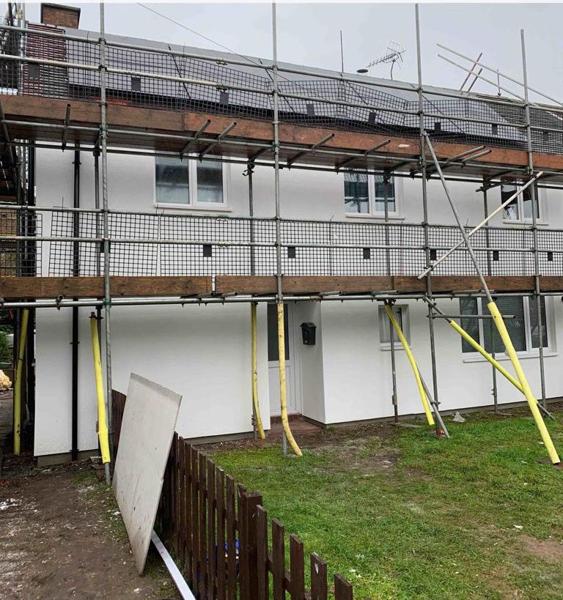
When does a roof repair need scaffolding, what types of scaffold are used for roofs and chimneys, and how to plan access in Staffordshire.
 Staff4dshire Scaffolding
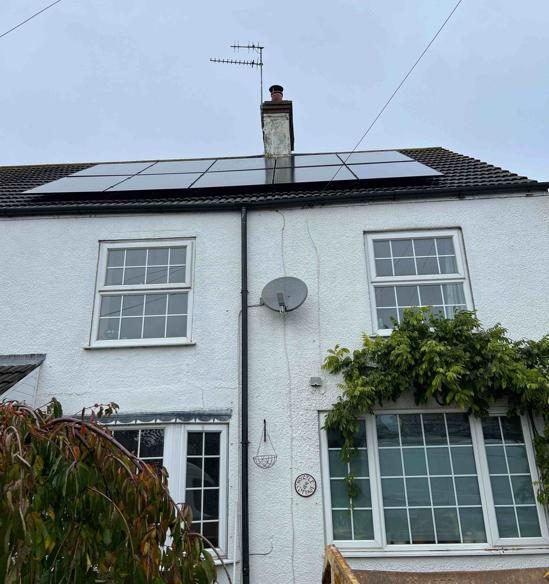
How scaffolding is used for solar panel installs on homes and businesses in Staffordshire, how long it stays up and how to prepare your property.