 Staff4dshire Roofing Specialists
Chimney Leaks and Lead Flashing: Causes and Fixes
Damp around a chimney breast? How lead flashings, back gutters, pointing and valleys cause most roof leaks, and how roofers in Staffordshire fix them.

If you have a garage, extension or dormer with a flat roof, sooner or later you will need to decide what to cover it with. The three systems we install most are EPDM rubber, fibreglass (GRP) and torch-on mineral felt. All three can give a long, watertight life when they are installed properly on a sound deck. This guide explains how each one works, where each one suits best and what to ask before you choose.
Whatever goes on top, a flat roof is only as good as the structure underneath. Before we talk about membranes, we check the timber or board deck for rot, sagging or soft spots, look at how water drains off the roof and check the edges, upstands and any rooflights. A new membrane laid over a failing deck will not last, and ponding water from poor falls will find any weak point.
On remedial jobs we often find the problem is not the membrane at all. On a garden room roof in Stafford, for example, our survey found leaks coming from details left by a previous installer, and the fix was targeted repairs to the EPDM, the rooflight, the parapet and the abutments rather than a complete new roof.
EPDM is a synthetic rubber membrane that usually goes on as a single sheet, bonded to the deck. On most domestic roofs that means very few or no joins across the main area, which removes one of the most common places for leaks to start.
EPDM is flexible, copes well with movement and temperature changes, and is laid cold with adhesives, so no naked flame is needed on the roof. That makes it a popular choice for garages, extensions and dormers, especially close to timber or other combustible materials. Trims, upstands and outlets need careful detailing, and that is where an experienced installer makes the difference.
The finish is a plain dark rubber surface. Some people love its clean look; others prefer the more traditional look of felt or the smooth, hard finish of GRP.
GRP, or glass-reinforced plastic, is built up on site: a resin is laid over glass-fibre matting on a suitable deck, then finished with a topcoat. Once cured it forms a seamless, hard-wearing surface that is moulded around corners and upstands.
Because it is formed in place, GRP can be shaped neatly around awkward details and gives a smooth, tidy finish, which is why it is often chosen for balconies, dormers and visible roofs. It needs dry weather and the right temperatures to cure properly, so planning around the British weather matters, and the deck has to be stiff and stable to avoid cracking.
Modern torch-on felt is a long way from the old felt-and-tar roofs many people remember. High-performance bitumen membranes are laid in layers, heat-welded to each other, with a mineral-finished cap sheet on top that protects the roof from UV and wear.
Felt is a proven, robust system with a traditional appearance, and it suits a wide range of roofs. Because it is installed with a torch, it needs to be laid by trained installers who follow hot-works safety precautions, particularly near timber, fascias and roof edges.
There is no single right answer. EPDM is a strong all-rounder for garages and extensions and is laid without heat. GRP gives a hard, seamless finish that suits balconies and roofs you can see. Torch-on felt is a durable, traditional option that works on a wide range of roofs.
The things that usually decide it are how the roof will be used, how visible it is, the access, the details around it (walls, rooflights, chimneys) and your budget. We will talk you through the options honestly after we have seen the roof.
Not every leaking flat roof needs replacing. If the deck is sound and the problem is a failed detail, such as a lifted trim, a split around a rooflight or a poorly finished abutment, a targeted repair can be the right answer. If the deck is rotten, the roof ponds badly, or the membrane has failed across a large area, replacement is usually better value in the long run.
When we survey a flat roof, we explain what we found and give you the options, rather than pushing a full replacement.
Staff4dshire Roofing Specialists install and repair EPDM, GRP and torch-on felt flat roofs across Rugeley, Lichfield, Cannock, Stafford, Burntwood and the wider West Midlands. Scaffolding can come from our own scaffolding company, so access is organised in-house.
Sometimes, but it depends on the condition of the existing roof and deck. In most cases we recommend stripping back to a sound deck so we can check it and get a proper bond.
GRP is often chosen for balconies and roofs that are walked on or seen, because it forms a hard, seamless finish. The deck and edge details must be designed for it.
Yes. We regularly carry out remedial repairs where earlier work has failed, after a survey to find the real cause.
Staff4dshire Roofing SpecialistsDamp around a chimney breast? How lead flashings, back gutters, pointing and valleys cause most roof leaks, and how roofers in Staffordshire fix them.
 Staff4dshire Scaffolding
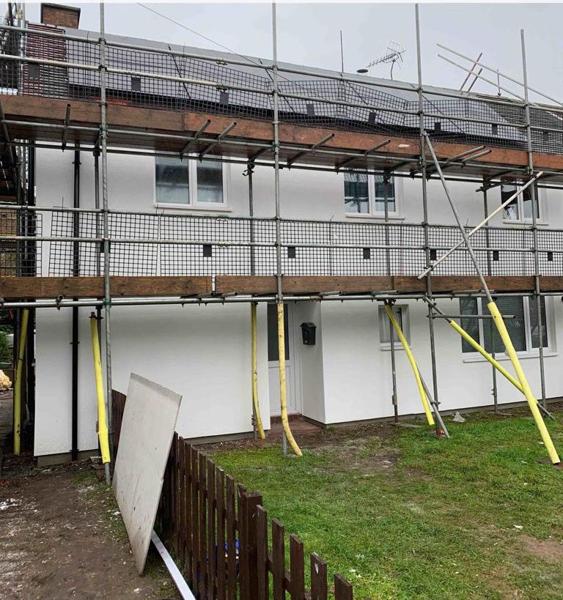
When does a roof repair need scaffolding, what types of scaffold are used for roofs and chimneys, and how to plan access in Staffordshire.
 Staff4dshire Scaffolding
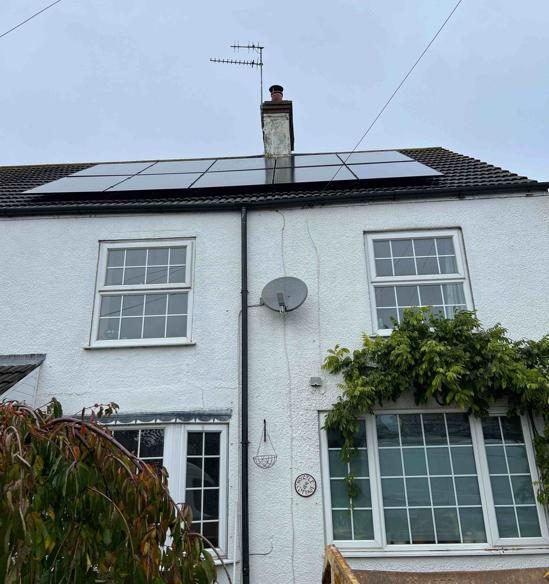
How scaffolding is used for solar panel installs on homes and businesses in Staffordshire, how long it stays up and how to prepare your property.