 Staff4dshire Groundworks & Utilities
Utility Connections for New Builds: Electric, Water & Gas
A step-by-step guide to new electric, water and gas connections for new builds and developments in Staffordshire and the West Midlands.

A new driveway is one of the biggest changes you can make to the front of a house, and the choice between tarmac and block paving comes up on almost every enquiry. Both can look great and last for many years, but only if they are built on the right base. Here is an honest comparison.
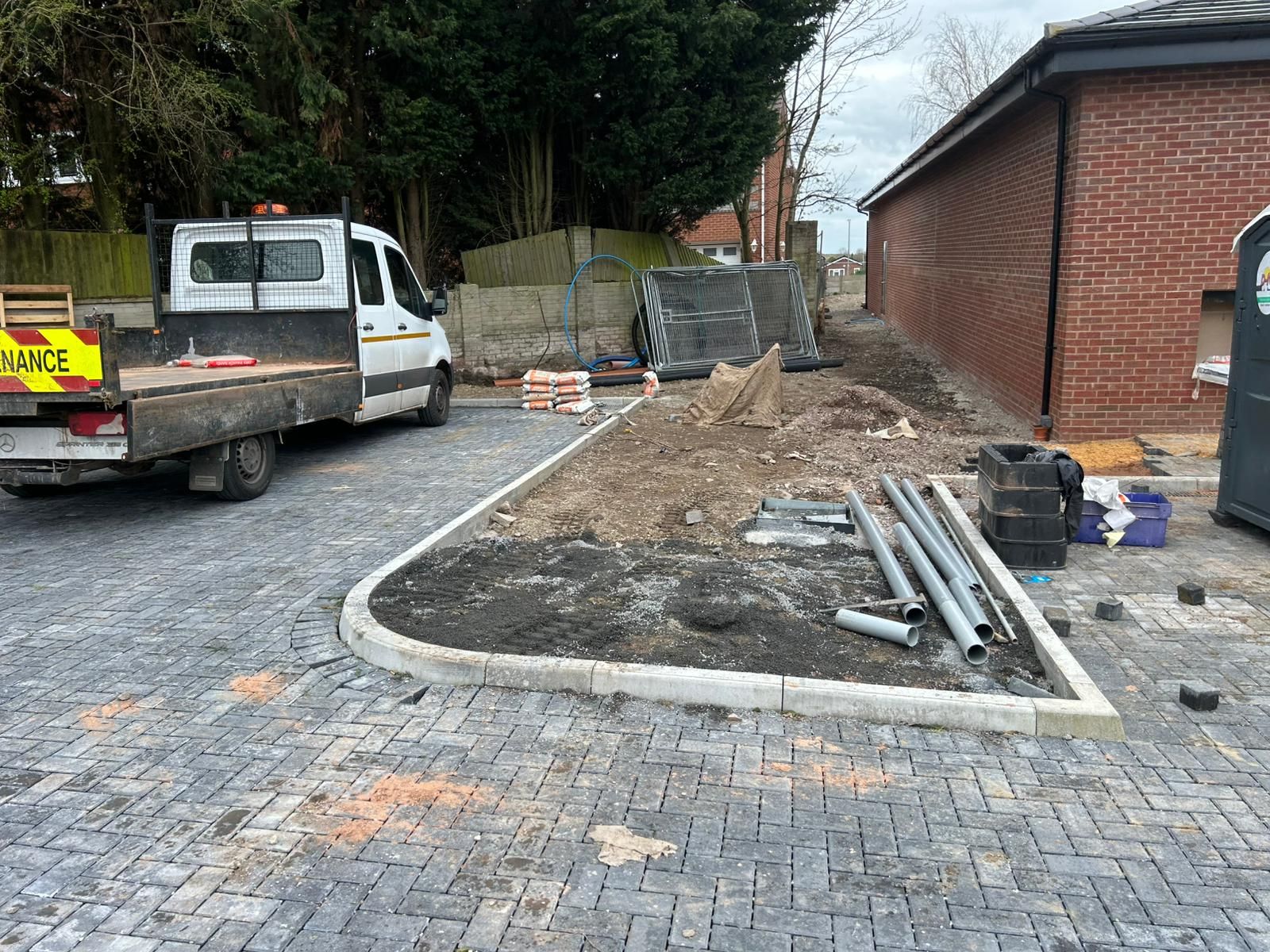
The surface you see is the last layer of a much bigger job. A good drive starts with digging out to the right depth, removing soft or unsuitable ground, and laying and compacting a sub-base, usually Type 1, in layers. Edges need to be restrained with kerbs or edging so the surface cannot spread, and water has to be designed out from the start.
On a recent drive in Wolverhampton we laid a two-coat tarmac surface on a compacted Type 1 sub-base, with a block border and ACO channel drainage connected to the existing system. That combination of base, edging and drainage is what keeps a drive level and dry.
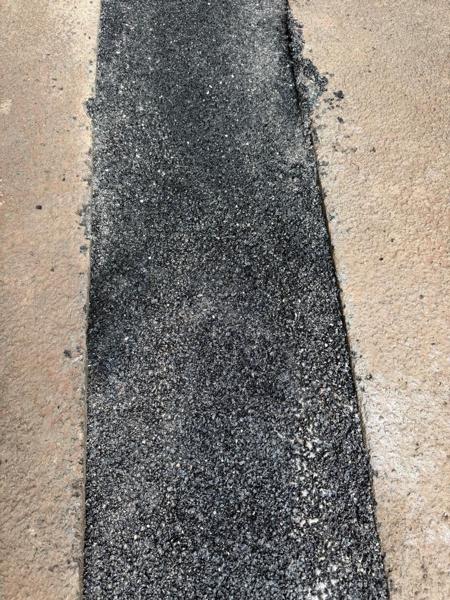
Tarmac, laid in a base course and a surface course, gives a seamless, smooth finish that is quick to lay once the groundwork is done. It suits larger drives, long access roads and car parks, and works well with a block or kerb border for a neater edge.
Tarmac is very hard-wearing when properly compacted. Its main drawbacks are fewer design options and the fact that patch repairs can show. It also needs drainage designing in, because standard tarmac is not permeable.
Block paving offers far more design choice: colours, sizes, patterns such as herringbone, and borders. Individual blocks can be lifted and relaid if you need to get to services underneath, which makes repairs less visible.
Block paving needs a well-compacted bed and good edge restraint, and the joints need to be kept topped up. Weeds in joints are usually a sign of joint sand loss and can be kept under control with routine maintenance. Permeable block paving systems are also available and can help with drainage.
In England, if you are laying a new hard surface over more than five square metres of front garden, it usually needs to be permeable, or drain to a permeable area such as a lawn or border, to avoid needing planning permission. Channel drains, soakaways and permeable systems can all help. We will design the drainage with you, so water stays on your property and does not run onto the road or next door.
Choose tarmac if you want a clean, seamless look, have a large or long area to cover, or need a hard-wearing surface for heavy use. Choose block paving if you want design flexibility, may need to access services in future, or want a particular pattern or colour. Many of our drives combine the two, with a block border around a tarmac drive.
The same principles apply to paths, patios and car parks: proper excavation, compaction, edging and drainage. We lay tarmac and block paving for driveways, paths, patios and car parks for homeowners, developers and commercial clients.
Whatever surface you choose, rainwater from a new front drive has to go somewhere. In England, replacing or creating a front garden hard surface of more than five square metres normally needs planning permission unless the water drains to a permeable area within the property or the surface itself is permeable. Channel drains feeding a soakaway or a rain garden are common solutions. Check the current rules with your local council if you are unsure.
Ask how deep they will dig, what sub-base they will use and how it will be compacted, how the edges will be restrained and where the surface water will go. A clear answer to those four questions tells you more about the finished drive than the brochure finish does.
Staff4dshire Groundworks & Utilities lays tarmac and block paving across Lichfield, Cannock, Walsall, Wolverhampton, Birmingham and Staffordshire, with our own diggers, dumpers and rollers.
It depends on the size, dig-out and drainage. We will give you a programme after the survey.
Yes. We break out and remove the old surface and spoil using our own plant and lorries.
Yes, we lay tarmac and block paving for car parks as well as driveways, paths and patios.
Staff4dshire Groundworks & UtilitiesA step-by-step guide to new electric, water and gas connections for new builds and developments in Staffordshire and the West Midlands.
 Staff4dshire Roofing Specialists
EPDM rubber, GRP fibreglass or torch-on felt? A practical guide to choosing a flat roof for garages, extensions and dormers in Staffordshire.
Staff4dshire Roofing SpecialistsDamp around a chimney breast? How lead flashings, back gutters, pointing and valleys cause most roof leaks, and how roofers in Staffordshire fix them.