 Staff4dshire Properties
Planning a Garden Transformation: Lessons from Lichfield
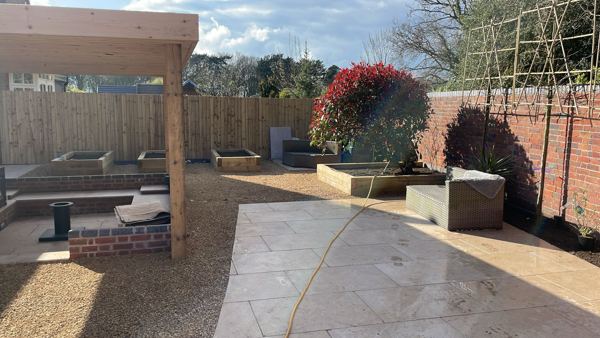
How to plan a full garden transformation, from sandstone paving and sleeper beds to pergolas and firepits, based on a real Staff4dshire project in Lichfield.

Car parks, footpaths and paved service roads take a lot of punishment from traffic, weather and water. When they fail it is usually because of what is underneath, not the surface you can see. Here is how commercial surfacing jobs are put together, from the first survey to the finished surface.
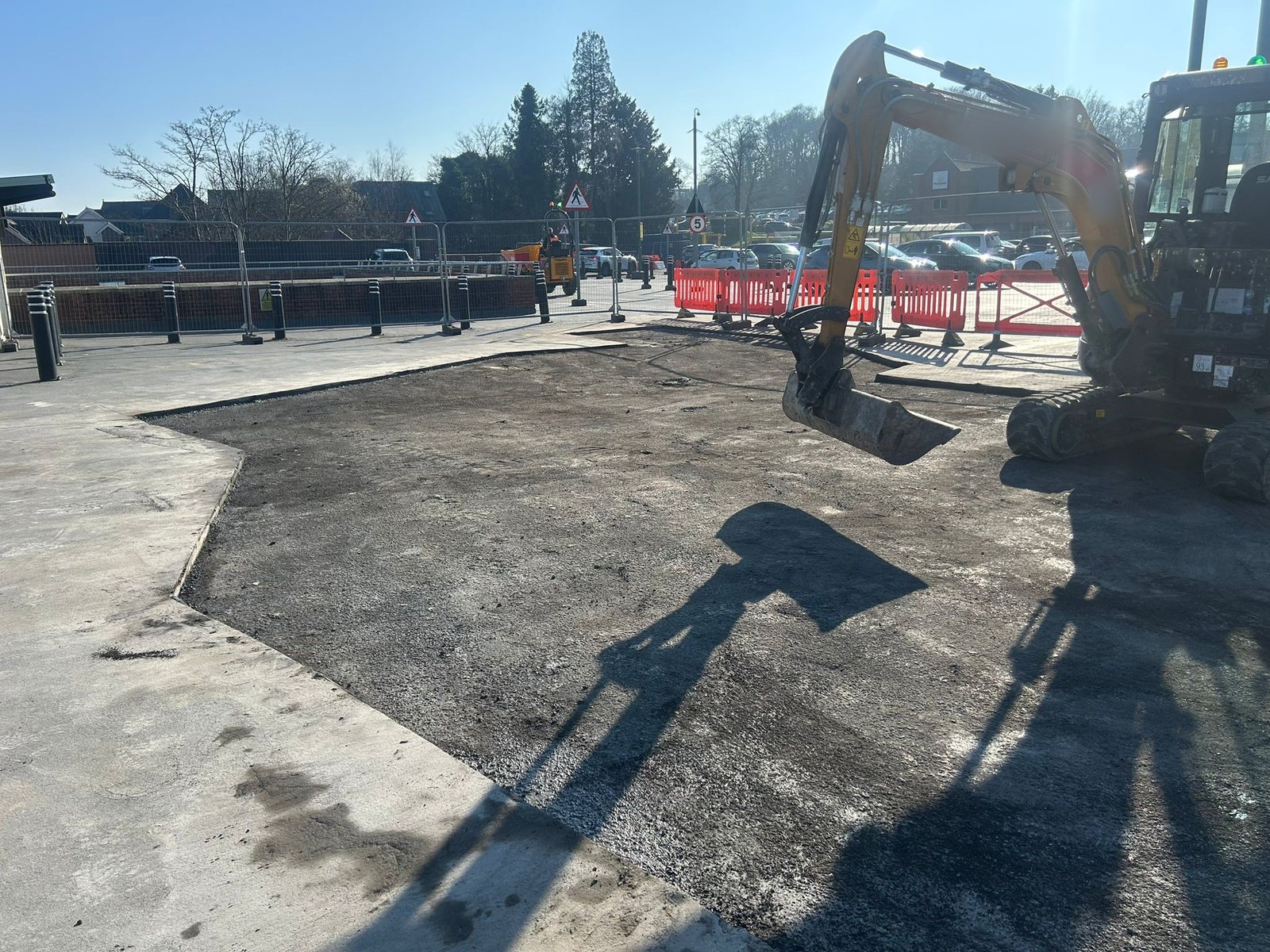
Every job starts with the existing levels, the condition of the current surface and where the water goes. Services are traced before any digging, and the build-up of sub-base and surfacing is chosen to suit the traffic: a pedestrian path needs far less than a car park used by vans and delivery lorries. On a working site, the job is phased so access is kept open where possible, with barriers, signage and safe routes for pedestrians.
Failed surfaces are broken out and taken away, and the ground is excavated to the depth the new build-up needs. A mini excavator does most of the work, with a breaker for old concrete and tarmac. Soft spots found at this stage are dug out and replaced, because they will show through the new surface if they are left.
Water is the enemy of any paved surface. New gullies, channel drains or slot drains are set in at this stage and connected to the existing system, and the formation is shaped so that the finished surface falls towards them. Getting the falls right is what stops puddles forming in the same place every time it rains.
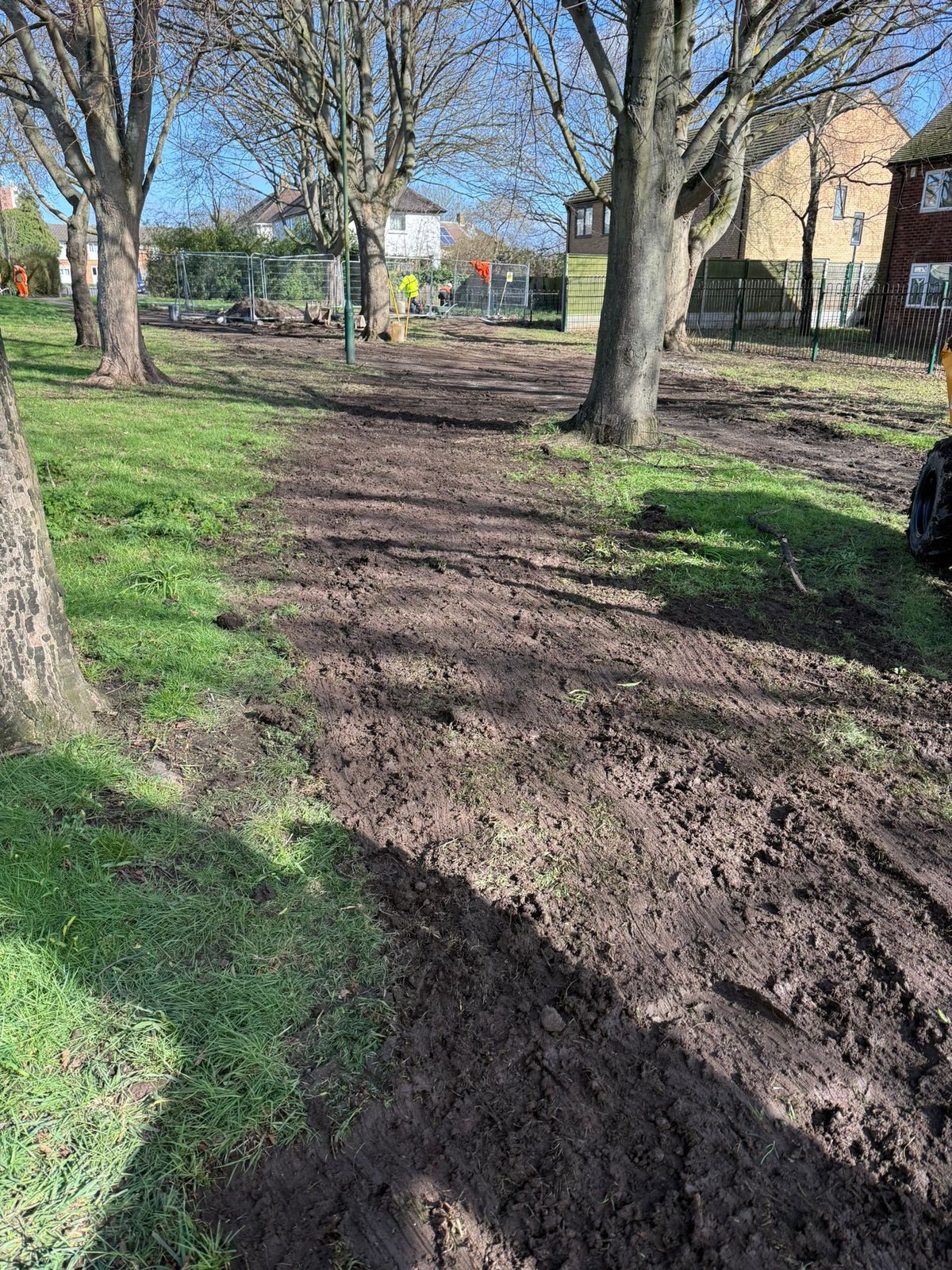
Kerbs and edgings are laid on a concrete bed and haunched to hold the surface in place. For footpaths through parks and open spaces, timber or steel edgings are a common alternative. Crushed stone sub-base is then laid in layers and compacted with a roller or plate compactor. Each layer is compacted before the next goes on, and the finished sub-base is checked for level and falls.
Tarmac is laid in a base course and a surface course, then rolled while it is still hot; it is quick over large areas and easy to line. Concrete slabs suit heavily loaded areas and are often poured out of hours on busy sites so they can cure undisturbed. Block paving is laid on a screeded sand bed, cut in at the edges, then compacted and jointed with kiln-dried sand. A herringbone pattern locks the blocks together and copes well with turning vehicles.
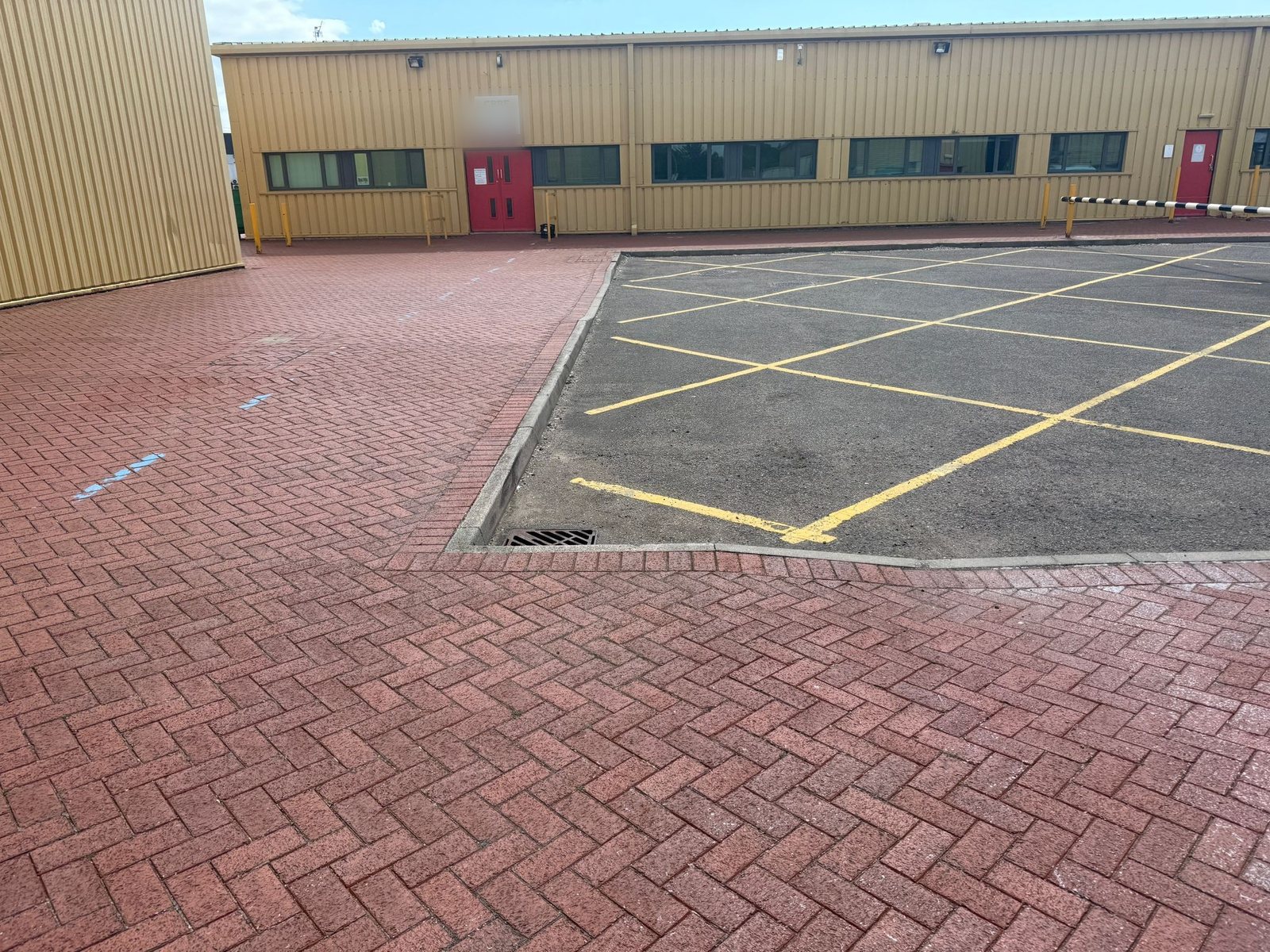
Once the surface is down, bays, hatching and directional arrows are lined, signage goes back up and the area is cleaned and reopened. A well-built car park or footpath should then need little more than routine cleaning and gully maintenance for many years.
Staff4dshire Groundworks & Utilities carries out surfacing, drainage and paving, with plant from Staff4dshire Plant Hire. See Staff4dshire Groundworks & Utilities for more about our work, or get in touch to talk through your site.
Often, yes. Work can be phased so parts of the car park stay in use, with barriers, signage and safe pedestrian routes around the working area. Some jobs, such as concrete pours, may be done out of hours to reduce disruption.
Both work well. Tarmac is quick to lay over large areas and easy to line, while block paving suits pedestrian areas and service roads and can be lifted and relaid in sections. The right choice depends on traffic, drainage, appearance and budget.
The sub-base carries the load. If it is too thin, poorly compacted or sitting on soft ground, the surface will rut, sink or crack, however good the top layer looks.
Staff4dshire PropertiesHow to plan a full garden transformation, from sandstone paving and sleeper beds to pergolas and firepits, based on a real Staff4dshire project in Lichfield.
 Staff4dshire Roofing Specialists
EPDM rubber, GRP fibreglass or torch-on felt? A practical guide to choosing a flat roof for garages, extensions and dormers in Staffordshire.
Staff4dshire Roofing SpecialistsDamp around a chimney breast? How lead flashings, back gutters, pointing and valleys cause most roof leaks, and how roofers in Staffordshire fix them.