
 Staff4dshire Roofing Specialists
Chimney Leaks and Lead Flashing: Causes and Fixes
Damp around a chimney breast? How lead flashings, back gutters, pointing and valleys cause most roof leaks, and how roofers in Staffordshire fix them.
Most pitched roofs can be repaired many times over: a slipped tile here, a cracked ridge there, a tired bit of lead around the chimney. But every roof reaches a point where patching stops being good value and a full re-roof becomes the sensible, lasting fix. This guide explains how to tell which stage your roof is at, what a proper re-roof involves from scaffold to final clean-up, the main material choices, and the rules that apply in England.
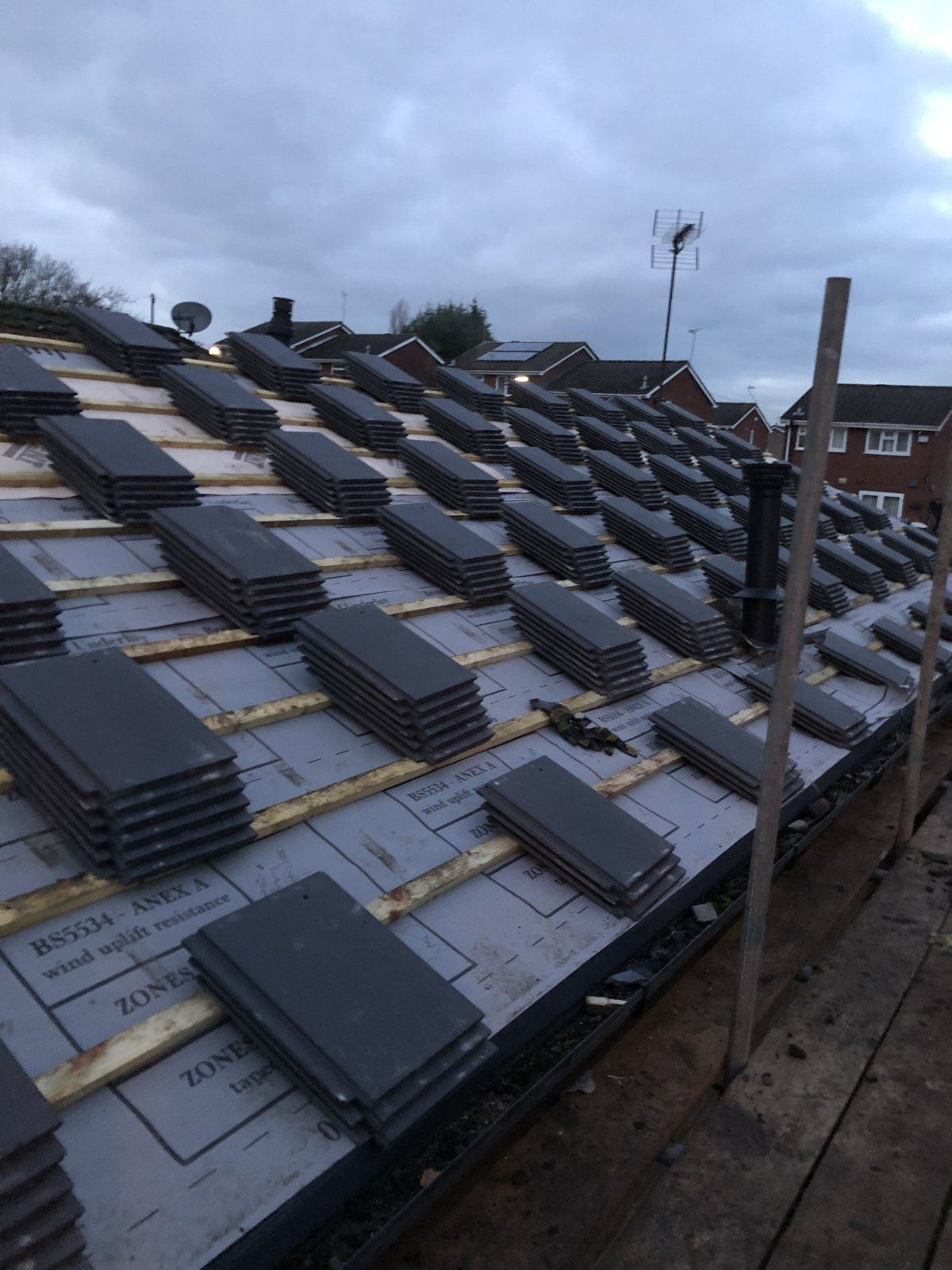
A roof is a system: the tiles or slates, the battens they hang on, the underlay beneath, the timbers that carry it all, and the ridges, hips, valleys, verges and leadwork that seal the edges and junctions. Isolated damage to one part, such as a few storm-blown tiles or a cracked ridge tile, is a repair. When several parts are failing at once, or the same problems keep coming back, you are usually paying again and again to hold together a roof that has reached the end of its life.
A good roofer should tell you plainly which side of that line your roof is on. Our approach is to inspect first, photograph what we find and explain it, so you can see the evidence for yourself before deciding.
One sign on its own rarely means a full replacement. Several together, especially worn underlay with failing fixings, usually do. A careful look from the loft with a torch on a bright day tells you a lot, and it is much safer than climbing a ladder.
We start with a site visit to check the roof covering, the timbers where they can be seen, the chimney, the leadwork and the roofline. You then get an itemised written quote that sets out the materials, the access needed and anything that cannot be confirmed until the old covering is off, such as hidden timber damage.
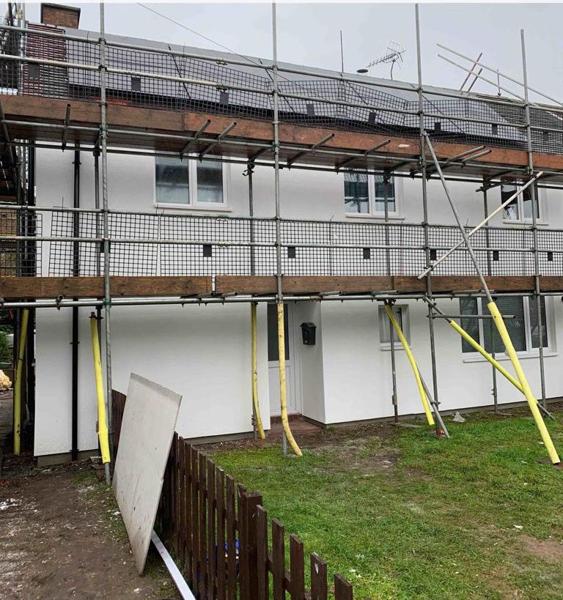
A re-roof needs a proper scaffold with edge protection and a working platform at eaves level, often with a loading bay for materials. We organise this through our own scaffolding company, so access is planned around the roofing work rather than booked separately. Gardens, paths, conservatories and skylights are protected before stripping starts, and waste is taken away in skips or by chute.
The roof is stripped in manageable sections, down to the rafters. Sound reclaimed slates or tiles can sometimes be set aside for reuse, which is often worth doing on older properties to keep the original character. Each section is made watertight before the team leaves site at the end of the day.
With the roof open, the rafters, purlins and wall plates can be checked properly. Any rot, insect damage or structural movement is shown to you and repaired before anything new goes on. This is the one stage where surprises can occur, which is why it is worth choosing a roofer who will explain what they find rather than cover it up.
A modern breathable membrane replaces the old felt, helping the roof shed any water that gets past the tiles while letting moisture escape from the loft. New treated battens are fixed at the correct gauge for the chosen tile or slate, and the covering is laid and fixed to suit the roof's pitch and exposure.
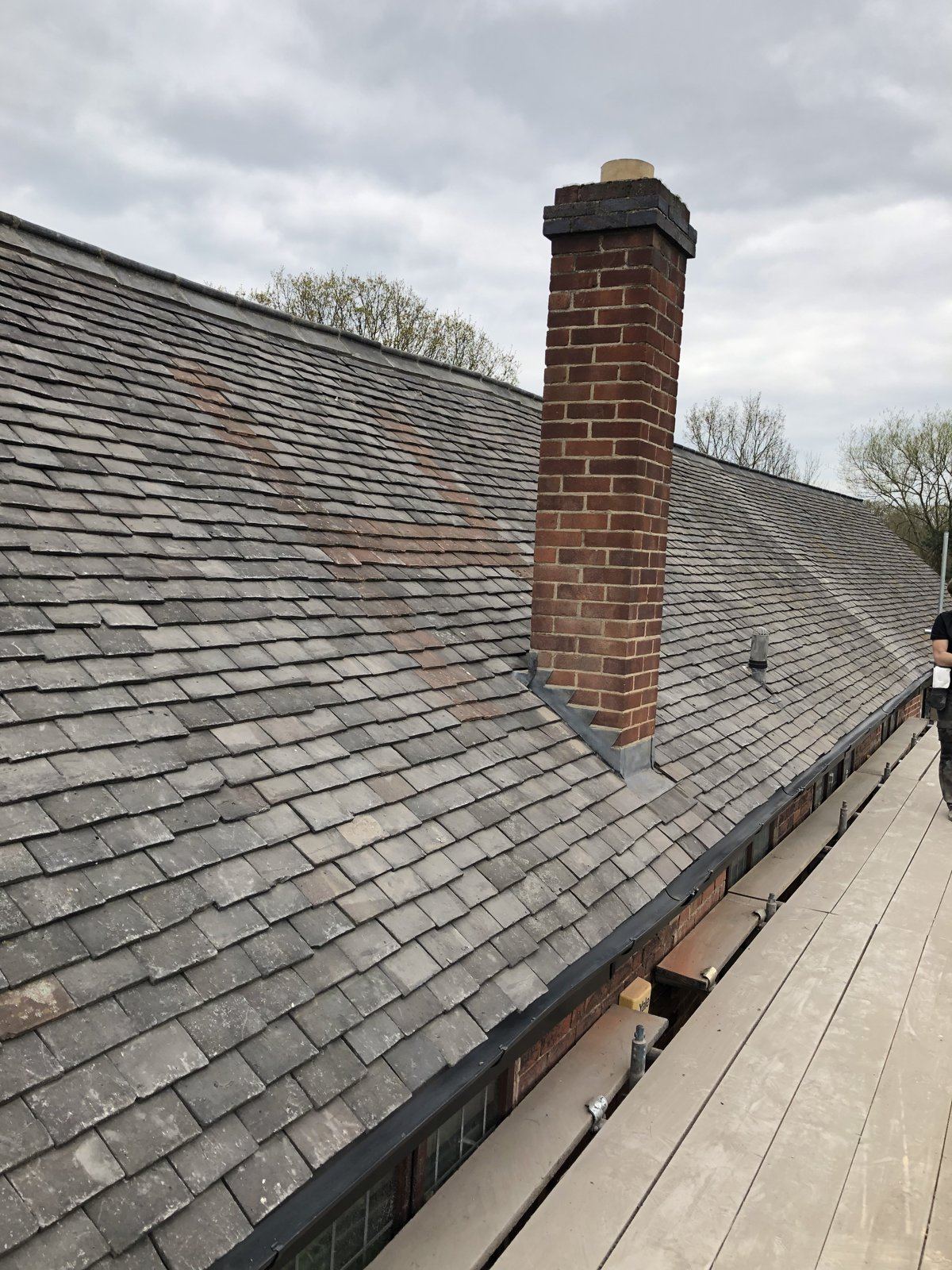
The details are where roofs most often fail, so they deserve the most care. Ridges and hips can be bedded in mortar or fixed with a dry system, and verges can be pointed or finished with dry verge units. Valleys are formed in lead, with a valley trough or as a laced or swept valley in plain tiles. Around chimneys, abutments and dormers, new lead flashings, soakers and back gutters are dressed in. Our guide to chimney leaks and lead flashing explains why that detailing matters so much.
A re-roof is the ideal time to renew fascias, soffits, bargeboards and gutters while the scaffold is up. Roof windows, ventilation tiles and any solar fixings are planned in at this stage too. Once the roof is finished we clear the site, check the gutters and downpipes run freely, and walk you through the work before the scaffold comes down.
The right covering depends on the house, the pitch of the roof, the look of the street and your budget.
Weight matters. Swapping lightweight slate for heavy concrete tiles, for example, can overload timbers that were never designed for it, so any change of covering should be checked first. In conservation areas the choice may also be restricted, which is one more reason to plan before ordering materials.
In England, replacing more than a quarter of a pitched roof covering is generally classed as renovating a thermal element. That brings the work under Building Regulations, which can mean upgrading the roof insulation where it is technically and economically practical, and the work has to be notified to building control. Like-for-like re-roofing does not usually need planning permission, but listed buildings, conservation areas and homes covered by an Article 4 direction may need consent.
Bats are protected by law and sometimes roost in roof spaces and under tiles. If there is any sign of bats, work has to stop and an ecologist must advise before it continues. It is worth mentioning any bat activity you have noticed when you first ask for a quote.
It depends on the size and shape of the roof, the covering chosen, how much timber repair is needed and, of course, the weather. A simple roof is quicker than one with hips, valleys, dormers and chimneys. We set out an expected programme in the quote, and keep you updated if the weather or hidden damage affects it.
Staff4dshire Roofing Specialists re-roof and repair pitched, flat and lead roofs across Staffordshire and the West Midlands. Because scaffolding comes from Staff4dshire Scaffolding and solar can be added by Margav Energy, you deal with one team and one point of contact from the first visit to the final check. If you are not sure whether your roof needs repairing or replacing, send us a few photos and your postcode and we will arrange a visit.
Related reading: Flat roof repair or replace? · Do I need scaffolding for a roof repair? · What scaffolding do I need for a roof job?
Replacing a roof covering like for like does not usually need planning permission. If your home is listed, in a conservation area or covered by an Article 4 direction, or if you want to change the look of the roof noticeably, check with your local planning authority before work starts.
In England, replacing more than a quarter of a pitched roof's covering is normally treated as renovating a thermal element, so it has to meet Building Regulations, which can include improving the roof insulation where that is practical. A switch to a much heavier covering can also mean the roof structure needs checking. We explain what applies to your roof when we quote.
Yes. Roofs are re-covered all year round. The roof is stripped in sections and made watertight at the end of each day, and work is planned around the forecast. Very wet, icy or windy days may pause work for safety and to protect the finish.
Yes, and a re-roof is a sensible time to do it because the scaffold is already up. Margav Energy, part of Staff4dshire Group, designs and installs solar PV, so the roof and the panel fixings can be planned together.
Staff4dshire Roofing SpecialistsDamp around a chimney breast? How lead flashings, back gutters, pointing and valleys cause most roof leaks, and how roofers in Staffordshire fix them.
Staff4dshire Roofing SpecialistsEPDM rubber, GRP fibreglass or torch-on felt? A practical guide to choosing a flat roof for garages, extensions and dormers in Staffordshire.
 Staff4dshire Scaffolding
When does a roof repair need scaffolding, what types of scaffold are used for roofs and chimneys, and how to plan access in Staffordshire.